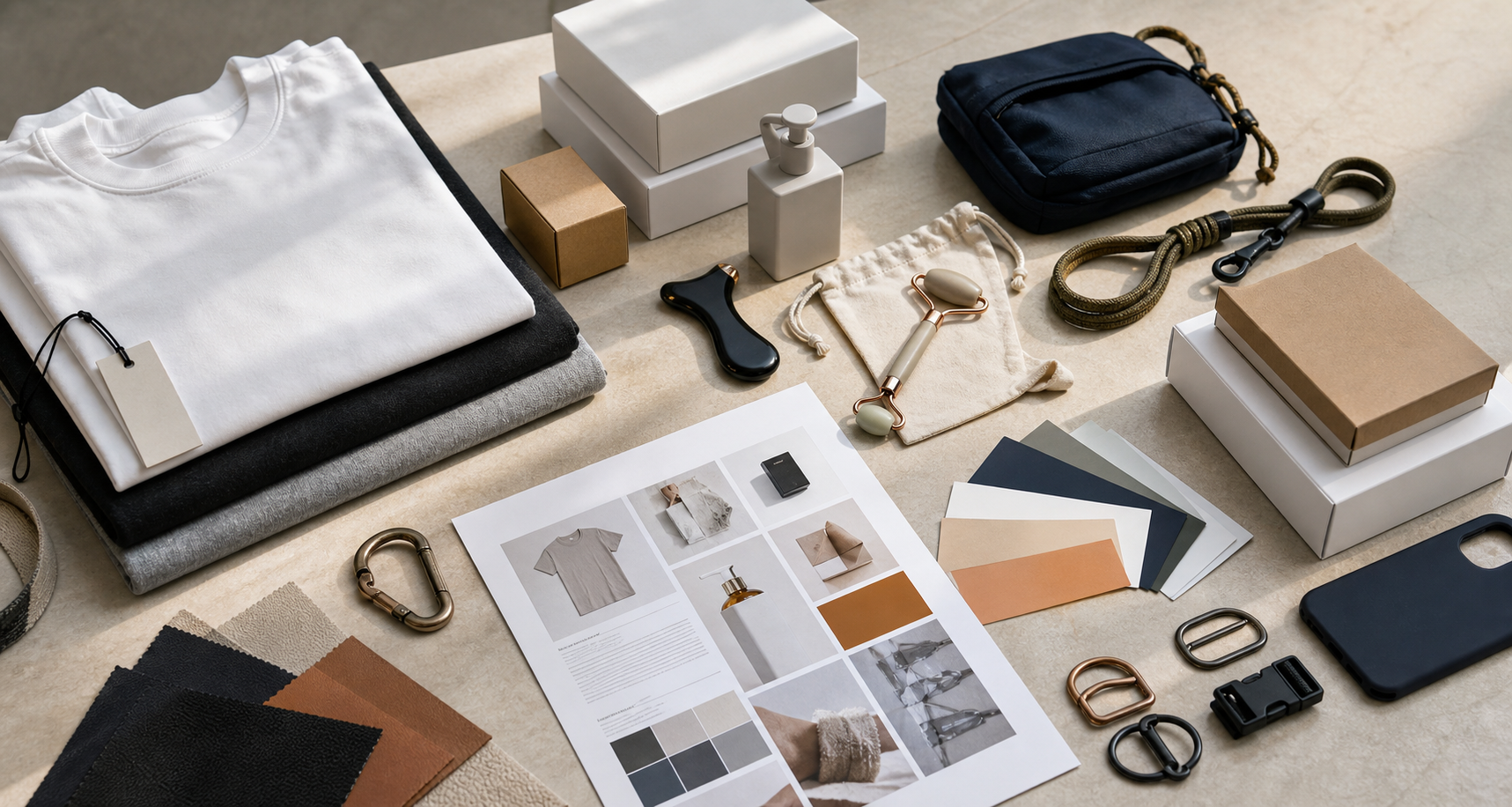
Sampling and product development
How Much Do Product Samples from China Cost and How Long Do They Take?
A useful estimate separates the sample itself from customisation, tooling, testing, revisions, and international delivery.
The short answer
For a straightforward catalogue item, a practical first budget is often tens of US dollars for the sample plus express delivery. Alibaba's buyer guidance gives an example of roughly US$50-100 for a lower-value item and express air shipment combined. A customised sample can cost much more and may take two to four weeks or longer before dispatch. A new prototype, special material, certification sample, or moulded part needs a project-specific quote.
There is no universal China sample price or lead time. Product category, dimensions, material availability, decoration, engineering work, tooling, packaging, testing, revision rounds, destination, and season all change the result. Treat online ranges as planning references, not supplier quotations.
Start by naming the sample you actually need
Two suppliers can quote very different numbers because they are offering different kinds of samples. Define the stage before comparing cost or speed.
| Sample type | What it can show | What it cannot prove |
|---|---|---|
| Stock or catalogue sample | Existing material, workmanship, size, finish, and basic supplier responsiveness | Your custom colour, logo, packaging, specification, or production consistency |
| Modified stock sample | A logo, colour, print, label, or small change applied to an existing base product | Performance of a newly engineered construction or final bulk process |
| Custom development sample | A product made against your drawings, specification, tech pack, artwork, or reference | Mass-production consistency unless the sample method and production method match |
| Prototype | Form, fit, mechanism, assembly, or design direction before production tooling | Final material, surface, unit cost, or production speed when prototype processes differ |
| Pre-production sample | The approved specification, materials, colours, components, artwork, and packaging before bulk production | That every production unit will match without written controls and inspection |
Ask the supplier to state which type it is, how it will be made, and every known difference from the intended bulk product.
If the supplier's operating role is still unclear, complete the checks in How to Tell If an Alibaba Supplier Is a Real Factory before treating a polished sample as evidence of factory ownership.
What a sample quote should include
The number called a "sample fee" may cover only the physical item. Ask for a line-by-line breakdown:
- Base product: the existing item or raw material used for the sample.
- Setup and labour: machine setup, pattern work, programming, hand finishing, colour mixing, or small-batch handling.
- Customisation: logo application, artwork setup, labels, special colour, components, finish, or packaging.
- Tooling: mould, die, cutting tool, screen, plate, jig, fixture, or prototype process. Confirm whether it is temporary or production-ready.
- Testing: factory checks, third-party laboratory tests, or destination-market compliance work. These are separate unless the quote says otherwise.
- Courier and import charges: pickup, fuel or remote-area surcharges, customs brokerage, tax, and duty where applicable.
- Revisions: whether one correction is included and what a new round will cost.
Useful planning ranges without false precision
The figures below are broad USD planning references, not Linkbase fees and not confirmed supplier quotations. They are most useful for deciding what information to request next.
| Route | Cost signal | Time before dispatch | Main variables |
|---|---|---|---|
| Existing stock sample | Often the item price or a modest sample charge, plus courier. Alibaba buyer guidance gives an example of about US$50-100 combined for a lower-value item and express shipment. | Often a few working days if genuinely in stock | Quantity, weight, destination, availability, and supplier handling policy |
| Simple customised sample | Frequently above the intended bulk unit price because setup and one-off labour are spread over one or a few pieces | Commonly around 2-4 weeks, but category and material availability matter | Logo method, colour matching, artwork, components, and approval speed |
| New custom product or prototype | Project-specific quote required; engineering, specialist materials, or tooling can make it materially higher than a stock or modified sample | Often several weeks and longer when tooling or several revisions are needed | Design maturity, process, tolerances, tooling, electronics, finish, testing, and revision rounds |
| Pre-production sample | May be included, charged separately, or credited later according to the supplier's written terms | Depends on final material, component, tooling, artwork, and packaging readiness | Whether it uses the exact bulk-production process and materials |
Alibaba's 2026 seller guidance for apparel, for example, lists stock samples at US$15-50 plus delivery and custom designs at US$50-150 plus delivery, with materially longer timing for custom work. That is a category example, not a rule for electronics, metal parts, cosmetics, furniture, or other products.
Sample cost also changes when colours, components, or packaging have their own purchasing minimums. See the China MOQ Guide for Small Brands for the cost drivers behind those minimums.
Count lead time from an agreed starting point
"Seven days" is ambiguous unless the supplier states when the clock starts and whether it means calendar or working days. Use a simple timeline:
- Brief confirmation: specifications, artwork, colours, quantities, intended use, and open questions are agreed.
- Payment and material readiness: the supplier receives payment and confirms materials or components.
- Tooling or setup: patterns, moulds, plates, programming, print screens, or jigs are prepared.
- Sample making: the item is produced, assembled, finished, and packed.
- Supplier review: measurements, appearance, function, photos, or a sample report are checked before dispatch.
- International transit: courier pickup, export processing, air transit, customs clearance, and final delivery.
- Buyer evaluation and revision: your team checks the sample and sends one consolidated change list.
Express transit is only the final part. FedEx states that its International Priority service can take 1-3 business days and International Economy 2-5 business days for many international lanes, but origin, destination, service availability, customs, and shipment details affect the actual estimate. Confirm the live courier quote and tracking plan for your route.
Request a sample quote that can be compared fairly
Send the same brief and question set to each supplier. Ask for the answers in writing:
- What exact sample type are you quoting?
- Which specification, drawing, artwork version, colour standard, and quantity does the quote cover?
- How will the sample be made, and what will differ from mass production?
- What is the sample fee, tooling fee, testing fee, packing charge, and courier charge?
- Is any fee credited against a bulk order? If yes, under what written conditions?
- When does lead time start, and is it stated in working or calendar days?
- What date will the supplier send pre-dispatch photos and what date will it hand the parcel to the courier?
- How many revision rounds are included, and what triggers a new charge?
- Who owns any tooling, where will it be stored, and can it be transferred?
Compare the total route, not only the sample fee. A cheaper sample may be slower, use a different process, exclude delivery, or require paid revisions.
Before approving the sample order
Common sample-stage risks
- Unclear baseline: the supplier modifies its own product while the buyer expects a newly developed item.
- Artificially fast promise: the quoted timing excludes material sourcing, artwork approval, tooling, or delivery.
- Sample-only quality: the sample receives special manual attention that is not translated into production controls.
- Hidden revision loop: feedback arrives in separate messages and creates avoidable rounds, cost, and delay.
- Wrong sample method: 3D printing, hand finishing, or temporary tooling is treated as proof of final production cost and quality.
- Refund assumption: a supplier says the fee is refundable but the bulk-order threshold, timing, or exclusions are not written.
- Courier surprise: dimensional weight, batteries, liquids, magnets, remote areas, customs, or destination taxes change the delivery cost or route.
Keep one approved reference sample and convert important observations into measurable production requirements. A sample is evidence for a decision; it is not a substitute for a complete specification, supplier verification, or an appropriate inspection and testing plan.
Before paying a larger deposit, work through the broader China supplier verification checklist, including legal identity, payment details, quotation consistency, and production follow-through.
Frequently asked questions
Why does one sample cost more than the bulk unit price?
The supplier may need to buy material in a minimum quantity, stop or set up equipment, prepare artwork or tooling, program a machine, and complete manual work for only one or a few pieces. Bulk pricing spreads those costs across more units.
Should a sample be free?
Sometimes a supplier can provide an existing low-value item free while the buyer pays delivery. A custom or resource-intensive sample is commonly charged. The better question is whether the fee, scope, production method, credit terms, and delivery cost are transparent.
Can the sample fee be refunded after a bulk order?
It can be credited or refunded if the supplier agrees, but this is a commercial term rather than a universal rule. Record the qualifying order value or quantity, deadline, amount credited, and any exclusions in writing.
How many sample rounds are normal?
There is no fixed number. A simple private-label item may need one approval round, while a new product can need several. Reduce avoidable rounds by locking the brief, consolidating feedback, and separating supplier error from buyer-requested design changes.
Does an approved sample guarantee the bulk order?
No. Confirm how the approved sample becomes the production standard, which attributes will be measured, who holds the reference, and what inspection or testing is required for the order.
Sources and current reference points
- Alibaba.com buyer guide: How to request samples before placing a wholesale order
- Alibaba.com seller guide: Apparel sample cost and timing examples
- FedEx: International service transit-time guidance
- DHL: Customs valuation guidance
Reviewed September 14, 2026. Cost and timing examples are general planning references and can change by product, supplier, route, season, and destination. This guide is not a supplier quotation or legal, tax, customs, compliance, or financial advice.