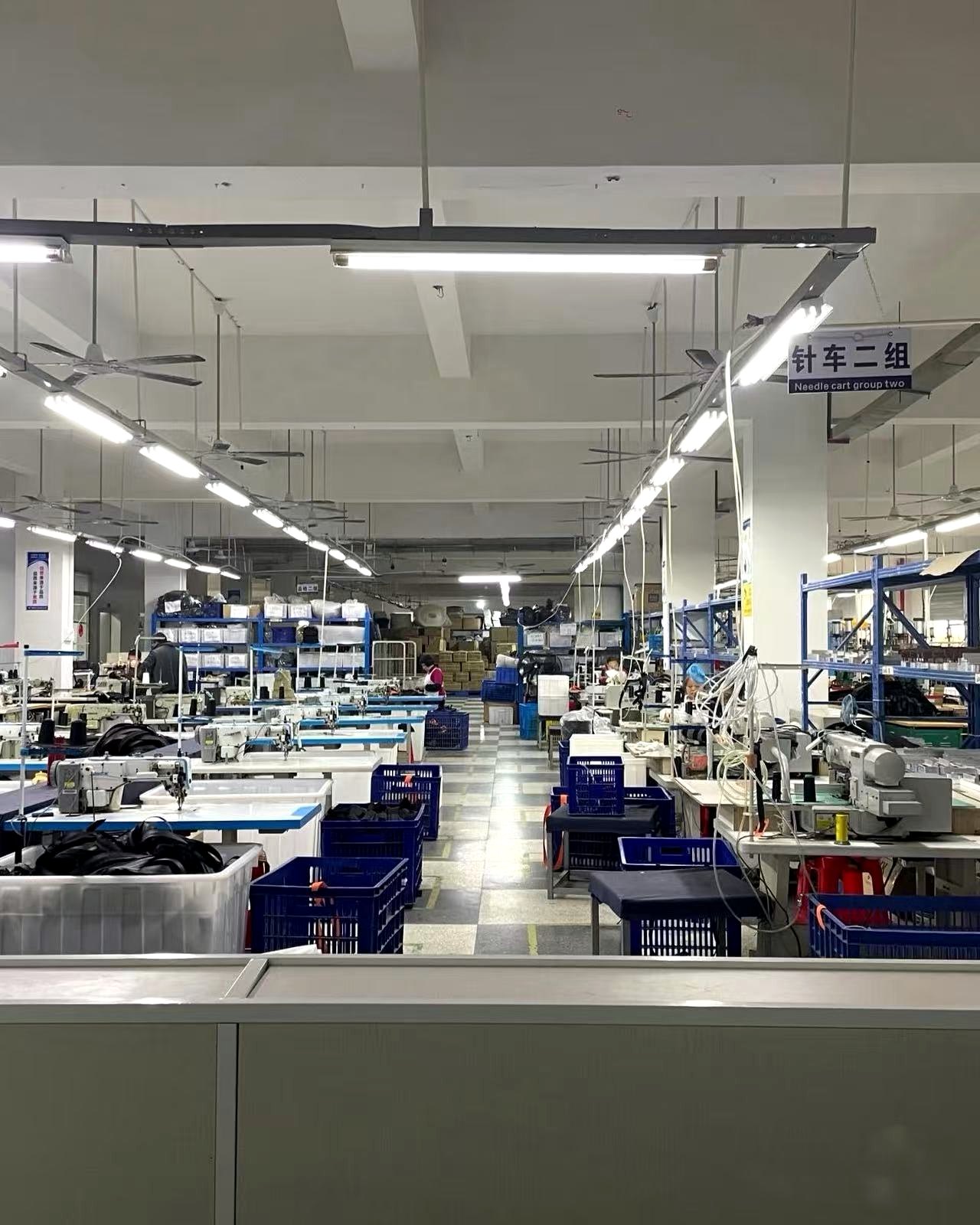
Supplier due diligence
How to Tell If an Alibaba Supplier Is a Real Factory
Do not decide from the company name, product photos, or one platform badge. Build a consistent picture of the legal entity, facility, process, quotation, and sample.
The short answer
To check whether an Alibaba supplier is the factory behind your product, verify six things: the Chinese legal entity, the address and operating role, the platform assessment report, the production steps completed on site, the supplier's technical response to your brief, and evidence from the sample or facility.
No single check is conclusive. A registered company can be a trader. A factory can outsource important processes. A supplier may manufacture one product family while trading other items. The practical question is not only “Are you a factory?” but “Who will control each critical step of this product?”
First, decide what “real factory” needs to mean
Buyers often use “factory” to mean a supplier that owns every machine, makes every component, and controls the entire order. That is uncommon for many products. Printing, coating, heat treatment, packaging, specialist electronics, and testing may be subcontracted even when the main supplier is a genuine manufacturer.
| Operating model | What it usually means | What to verify |
|---|---|---|
| Manufacturer | Completes the main production process at its own facility | Which process, equipment, capacity, and final QC are in house |
| Manufacturer and trader | Makes some products and sources others | Whether your exact product is made internally or purchased elsewhere |
| Trading company | Coordinates orders through one or more factories | Which factory makes the item and who controls specifications, changes, QC, and packing |
A trader is not automatically a bad choice. It may be useful for mixed categories, lower quantities, or products involving several specialist suppliers. What matters is that the role is transparent and the commercial value is clear.
1. Match the Alibaba profile to the Chinese legal entity
Ask for the supplier's Chinese company name, Chinese business licence, and Unified Social Credit Code. Search the entity in China's official National Enterprise Credit Information Publicity System.
Compare the registered details with the Alibaba profile, quotation, contract, invoice, factory address, and proposed payment beneficiary. An English store name may legitimately differ from the registered Chinese name, but the supplier should be able to explain the relationship clearly.
Use the business scope as a clue, not a verdict
The registry can show registration status, address, legal representative, and business scope. Manufacturing language in the business scope supports the supplier's explanation, but it does not prove that the company currently owns the relevant equipment or produces your product. A trading entity may also work closely with capable factories.
2. Read the assessment report, not only the badge
Alibaba describes its Verified Supplier tier as including on-site verification by an independent third-party inspection company and a buyer-visible assessment report. That report is more useful than the badge by itself.
Look for details that connect the assessed facility to your product:
- Chinese legal company name and assessment date
- Factory address compared with the licence and quotation
- Main products and production processes observed
- Machinery type, quantity, ownership, and condition
- Production, quality, engineering, and export staffing
- Stated capacity and the basis for the figure
- Subcontracted processes and related control procedures
3. Replace “Are you a factory?” with process questions
A weak supplier can answer “yes” in one word. A useful supplier should be able to explain how the product moves through production.
- Which production steps for this exact product are completed at your facility?
- Which steps or components are subcontracted?
- What equipment is used for the main process?
- Who buys and approves the main material or components?
- Where are final assembly, inspection, and packing completed?
- Who owns any required tooling, and where is it stored?
- How are changes from the approved sample transferred to production?
Ask the questions against one defined product, not the supplier's business in general. A company may provide a truthful factory tour while still outsourcing the item you intend to buy.
4. Check whether the product catalogue tells a coherent story
A focused catalogue can support a manufacturing claim when the products share materials, processes, and machinery. A store offering unrelated categories may be a trader or may list products supplied by partner factories.
Neither pattern proves the operating role. Use the catalogue to create questions:
- Do the products share a plausible production process?
- Are product photos, factory images, and certificates consistent with the same entity?
- Are identical photos found across many unrelated supplier pages?
- Can the supplier explain which listed products are made internally?
- Does the claimed capacity make sense for the visible equipment and staffing?
A broad catalogue is a reason to clarify the sourcing model, not automatic evidence of dishonesty.
5. Request production evidence tied to your product
Current photos and a live video walkthrough can help connect the sales contact, company sign, workshop, equipment, materials, QC area, and packing area. Ask to see the relevant machine operating and, where practical, a comparable item moving through the process.
- Start outside or at the company sign and enter the facility.
- Show the main production area without relying on edited footage.
- Identify the process and equipment relevant to your product.
- Show material storage, work in progress, QC, and packing areas.
- Explain which areas belong to the supplier and which belong to partners.
Video is supporting evidence, not a substitute for a formal on-site audit when the order risk justifies one. A visit should verify process control, not merely confirm that a building exists.
6. Use the quotation and sample to test real capability
Send the same supplier-ready brief to a small comparison group. The brief should cover the product, material, dimensions, finish, quantity, variants, packaging, sample expectations, and known compliance needs.
| Evidence | Stronger signal | Weak signal |
|---|---|---|
| Technical reply | Specific questions about materials, tolerances, process, and use | Immediate “no problem” without clarification |
| MOQ explanation | Minimums linked to material, machine setup, colour, component, or packaging | One unexplained number that changes repeatedly |
| Lead time | Timing broken into material, tooling, sample, and production stages | Very short promise with no assumptions |
| Sample | Sample method and differences from mass production are disclosed | A generic sample presented as proof of custom capability |
| Quote revisions | Changes are traceable to specification changes | Price or terms change without a clear reason |
A technically strong reply does not prove factory ownership, but it helps show whether the supplier understands and controls the work. Keep an approved sample and convert important attributes into written production criteria.
7. Use an independent on-site check when the risk justifies it
For a higher-value, highly customized, safety-sensitive, or tooling-heavy order, consider an independent supplier audit before committing. The audit scope should match the product and the decisions you need to make.
An on-site check can look at the legal entity and address, relevant equipment, active processes, staffing, quality records, subcontracting, material control, production planning, and traceability. A pre-shipment product inspection is a different activity: it checks a specific order against agreed criteria rather than establishing the supplier's operating role.
A practical factory-identity checklist
Do not turn the checklist into a simple pass/fail score. One serious identity or capability mismatch can matter more than several positive surface signals.
Red flags worth pausing for
- The supplier will not provide its Chinese legal company name.
- The factory address changes across the profile, report, quotation, or video.
- The assessment report does not cover the product or process being discussed.
- The supplier refuses to explain which work is subcontracted.
- Factory images appear unrelated to the listed product categories.
- The sales contact cannot answer basic process questions or arrange technical follow-up.
- The sample is generic, but the supplier presents it as proof of custom mass-production capability.
- Payment is requested to an unexplained company or personal account.
A red flag is a reason to stop and investigate. It is not always proof of fraud. Record the explanation and check it against independent evidence.
Frequently asked questions
Does the Alibaba Verified Supplier badge mean the seller is a factory?
Do not use the badge alone to reach that conclusion. Review the underlying assessment report, business type, legal entity, facility, observed processes, and whether your exact product is made there. Alibaba states that Verified Suppliers receive third-party on-site verification and a detailed assessment report; the buyer still needs a project-specific capability check.
Does a Chinese business licence prove manufacturing capability?
No. It can confirm the registered entity, status, address, legal representative, and business scope. It does not prove current equipment, capacity, process control, or performance on your order.
Should buyers avoid trading companies?
Not automatically. A transparent and capable trading company may be useful for mixed products, lower quantities, specialist processes, or consolidation. Confirm which factory is involved and who controls specification changes, final QC, packing, and commercial responsibility.
Does Trade Assurance prove the supplier is a factory?
No. Alibaba describes Trade Assurance as order and payment protection for eligible transactions handled through the platform. It does not establish who owns the production facility. Put the exact specification, quality criteria, shipping terms, and other important commitments into the protected order.
Is a live video call enough?
No. It is useful supporting evidence. For orders with greater financial, quality, tooling, or compliance risk, use a more formal audit or product-specific verification plan.
Official and institutional resources referenced
- Alibaba.com: Verified Supplier program overview
- Alibaba.com: Trade Assurance overview
- China's National Enterprise Credit Information Publicity System
- European IP Helpdesk: How to search for basic Chinese company information
This guide is general sourcing information, not legal, tax, compliance, or financial advice. Verification depth should reflect the product, destination market, order value, and consequences of failure.